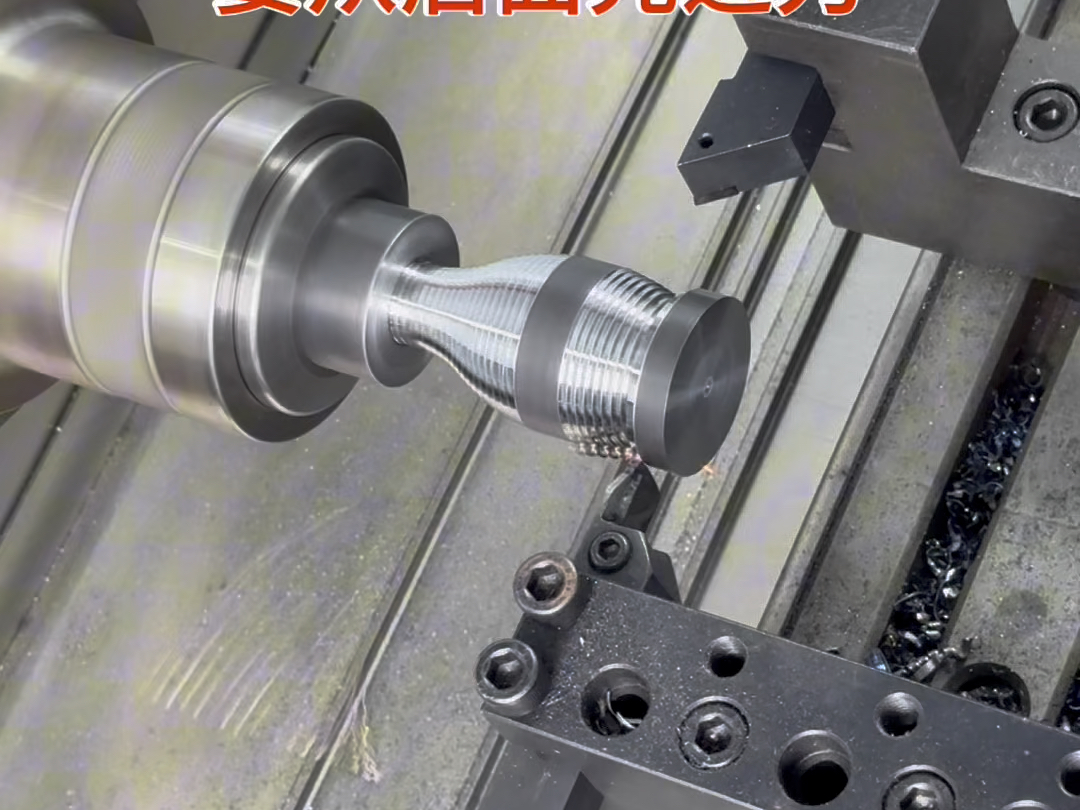
After 2026, with the deepening of the “Made in China 2025” strategy and the overall transformation and upgrading of the manufacturing industry, the domestic prototype industry will bid farewell to the traditional labor-intensive model and move towards intelligence, precision, and greenification. The main directions for technological upgrading are reflected in the following four aspects:
The first is the widespread adoption of intelligent and automated production. Traditional prototype manufacturing heavily relies on manual grinding, polishing, and other post-processing steps, which are inefficient and prone to quality fluctuations. In the coming years, automated CNC machining centers paired with robotic loading and unloading systems will become standard equipment. Additionally, more six-axis robots and automated production lines will be introduced for deburring, painting, and other processes, enabling “black light factory”-style operations. This will significantly enhance delivery consistency and reduce labor costs.
Secondly, the deep integration and application of additive manufacturing (3D printing) technology. 3D printing will transition from being an auxiliary method to becoming one of the core processes in prototype production. With the maturity of SLM (Selective Laser Melting) and MJF (Multi Jet Fusion) technologies, printing accuracy and material performance will rival traditional machining, enabling the direct production of functional prototypes and even small batches of end-use parts. Multi-material hybrid printing technology will also break through the limitations of appearance verification, meeting the needs for the integrated molding of complex structures.
Thirdly, it is the full-process management empowered by digitalization and AI. Prototype enterprises will fully adopt cloud-based solutions, establishing a digital closed loop from quotation, programming to production. AI technology will be deeply integrated into CAM programming, enabling automatic optimization of tool paths and collision detection. Meanwhile, the DFM (Design for Manufacturability) analysis system based on big data can automatically identify design defects during the order receiving stage, preemptively avoiding processing risks and significantly shortening the R&D cycle.
Fourthly, it is high-end material processing and green manufacturing. With the explosion of demand in the fields of new energy vehicles, aerospace, and medical care, prototype processing will extend to difficult-to-process materials such as PEEK, titanium alloy, and carbon fiber composite materials, forcing the upgrading of cutting tools and process parameters. At the same time, under the high pressure of environmental protection, dust recovery, exhaust gas treatment, and cutting fluid recycling systems will become the focus of technological transformation, driving the industry towards a green and sustainable direction.
In summary, the prototype industry after 2026 will no longer merely be a “mimic” of products, but rather a high-end service sector integrating intelligent manufacturing and material science.