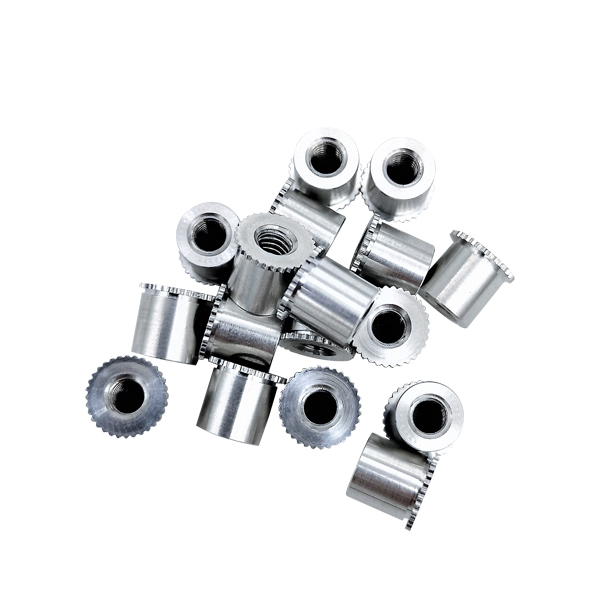
Undercut structure in prototype processing refers to grooves or protrusions that cannot be directly machined by a single directional tool, and is a common difficulty in complex structure prototypes. There are three main mainstream solutions in the industry:
Option 1: Special reverse milling cutter+multi axis angle head (CNC process)
This is currently the most commonly used method to solve complex tipping, with the core being “precise avoidance+efficient chip removal”.
Specific method: Select a dedicated reverse milling cutter (with a blade length 30% longer than a conventional milling cutter) according to the reverse angle and depth, machine a guide groove at the reverse entrance, and adjust the machining angle with a multi axis machine tool angle head to achieve blind spot machining
• Applicable scenarios: Metal/plastic prototypes with complex structures such as deep cavities and irregular buckles (such as automotive parts, smart home control panels)
• Process parameters: speed 8000-12000r/min, feed 150-250mm/min, cutting depth 0.1-0.3mm
Effect: The chip removal efficiency is improved by more than 60%, the pass rate of reverse machining is ≥ 98%, and the error can be controlled within ± 0.005mm
Option 2: Piece processing+precision bonding (disassembly process)
Disassemble and process the inverted structure, and then assemble it through precision bonding.
Specific method: Split the parts with reverse buckles into 2-3 independent components along the reverse deduction line, process them separately, and then splice them together with high-strength glue or mechanical fasteners
• Applicable scenarios: large-sized and structurally complex prototypes, or situations where the depth of the reverse button is too large to be processed in one go
Advantages: Reduce machining difficulty, avoid tool interference, suitable for CNC three-axis machine tools
Attention: Special gauges need to be designed to ensure the accuracy of splicing, and post-processing requires polishing the joints
Option 3: 3D printing+silicone replication (indirect molding)
By using indirect molding methods to bypass the difficulty of reverse machining.
Specific method: First, use SLA/SLS 3D printing to make a mother mold with a reverse buckle, and then make a silicone mold for vacuum replication
Applicable scenarios: Complex internal cavities, curved inverted structures, small batch (10-100 pieces) verification
Advantages: The silicone mold has good flexibility and can easily demold complex inverted structures. The detail reproducibility can reach 0.1mm
• Limitations: Material properties differ from mass production, suitable for appearance/functional verification, not suitable for high-strength testing
When selecting a solution, it is necessary to comprehensively consider accuracy requirements, material types, batch sizes, and cost budgets to avoid “excessive processing” or “insufficient accuracy”